About Basalt Fiber Yarn
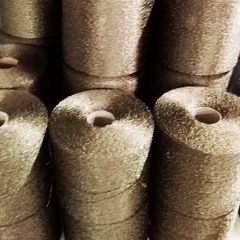
Basalt Fiber Yarn
- No carcinogenic risks
- Easily manufactured in various tex values from 68 to 1000
- Will not split longitudinally
- Inert, corrosion-resistant and non-toxic
- Very high resistance to chemicals, alkaline, acid and solvents
- Immune to nuclear radiation, UV light and biologic contamination
- Good elasticity and fatigue resistance
- Low friction coefficient
Ideal for high-performance applications: Superior performance as an automotive muffler filler, delivering intense heat and sound absorption
- Continuous strand reinforcement for composites to improve integral strength and provide high temperature tolerance
- Specialty woven fabrics for fire protection and containment
- High-pressure/high-temperature pipeline and vessel reinforcement
- Can be cut into various strand lengths for remanufacture into value-added products
- Immunity to radiation makes it ideal for insulation applications in nuclear power generation plants and x-ray apparatus
Specification Thermal limits of application-260 degree C/-436F to +982 C/1800FVitrification temperature1050 C/1922 F Melting temperature1450 C/2642 FDensity2600/2800 kg/m3Filament diameter6,9,11,13,16 to 23 microns (depending on end use)
High Performance and ReliabilityBasalt Fiber Yarn provides exceptional durability, elevated tensile strength (2000 MPa), and a tensile modulus of 89 GPa. Its natural basalt composition translates into excellent chemical and corrosion resistance, as well as safety for high-temperature and fireproof applications. The yarn's superior electrical insulation and low thermal conductivity (0.031-0.038 W/(mK)) further enhance its reliability in critical industries.
Versatile ApplicationsEngineered to meet the needs of multiple sectors, Basalt Fiber Yarn is widely used in industrial insulation, fireproof fabrics, composite reinforcements, and advanced construction. Its suitability extends into the automotive and aerospace industries, where high strength, light weight, and thermal resistance are paramount. Available in single or multiple ply, with customizable lengths and diameters, the yarn adapts effortlessly to unique project demands.
Customizable Packaging and Treatment OptionsBasalt Fiber Yarn is offered in customized packaging such as cartons or pallets to protect product integrity during transport. Options for surface treatment, including sizing or untreated finishes, and PTFE coating, allow customers to tailor yarn properties for optimal performance in specific applications. Standard dimensions range from 6-13m in diameter, while lengths and coatings are fully adjustable to suit your requirements.
FAQ's of Basalt Fiber Yarn:
Q: How does Basalt Fiber Yarn's strength compare to other fiber materials?
A: Basalt Fiber Yarn exhibits a breaking strength of over 2000 MPa, which is significantly higher than standard E-glass fiber. This superior tensile strength ensures longevity and robust performance, especially in demanding industrial, construction, and composite applications.
Q: What are the primary benefits of using Basalt Fiber Yarn in industrial applications?
A: The main advantages include excellent resistance to fire (operating up to 700C, short term up to 960C), outstanding chemical and corrosion resistance against acids, alkalis, salts, and solvents, as well as exceptional electrical insulation. These properties ensure high safety and durability in various environments.
Q: Where can Basalt Fiber Yarn be applied?
A: Basalt Fiber Yarn is ideal for use in woven fabrics, reinforcements, composite production, fireproof materials, insulation, and construction. It is also well-suited for automotive and aerospace sectors where lightweight, high-performance materials are essential.
Q: What process is used to manufacture Basalt Fiber Yarn?
A: Basalt Fiber Yarn is produced by melting natural basalt rock at approximately 1450C, then extruding it into fine, continuous filaments with diameters ranging from 6 to 13m. These filaments are twisted or taken as direct roving, optionally finished with surface treatments, and then wound for shipment.
Q: Can the yarn's packaging and length be customized for specific requirements?
A: Yes, Basalt Fiber Yarn can be supplied in various lengths and packaged in cartons or pallets according to customer specifications. This flexibility ensures that the product meets diverse application and logistics needs.
Q: What surface treatment and coating options are available for Basalt Fiber Yarn?
A: Customers can select from untreated yarn or versions with sizing, and optional PTFE coatings or other custom finishes. These treatments enhance processing compatibility and end-use performance, depending on the fabrication methods and requirements.
Q: When is Basalt Fiber Yarn preferred over traditional glass fibers?
A: Basalt Fiber Yarn is chosen over traditional glass fibers when higher mechanical strength, better thermal stability, and increased resistance to aggressive chemicals and fire are critical, particularly in advanced composites, fireproof applications, and challenging environmental conditions.

 English
 Spanish
 French
 German
 Italian
 Chinese (Simplified)
 Japanese
 Korean
 Arabic
 Portuguese
 +8613524603686


 Send Inquiry




 Send Inquiry


 Send Inquiry


