About Basalt Fiber Roving
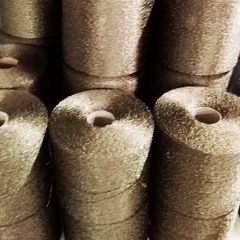
Basalt Fiber Roving
- Used at 1200 degree F / 648degree C continuous, maintains integrity at temperatures up to 1800 degree F / 982 degree C
- Low elongation under load
- No carcinogenic risks
- Easily manufactured in various tex values from 68 to 4800
- Will not split longitudinally
- Inert, corrosion-resistant and non-toxic
- Very high resistance to chemicals, alkaline, acid and solvents
- Immune to nuclear radiation, UV light and biologic contamination
- Good elasticity and fatigue resistance
- Low friction coefficient
Ideal for high-performance applications:
- Superior performance as an automotive muffler filler, delivering intense heat and sound absorption
- Specialty woven fabrics for fire protection and containment
- High-pressure/high-temperature pipeline and vessel reinforcement
- Can be cut into various strand lengths for remanufacture into value-added products
- Immunity to radiation makes it ideal for insulation applications in nuclear power generation plants and x-ray apparatus
Specification Thermal limits of application-260 degree C/-436 degree F to +982degree C/1800degree F Vitrification temperature1050 degree C/1922 degree F
Melting temperature1450 degree C/2642 degree F Density2600/2800 kg/m3 Filament diameter6,9,11,13,16 to 23 microns (depending on end use)
Exceptional Mechanical Properties and VersatilityBasalt Fiber Roving stands out for its extraordinary tensile strength and high elastic modulus, surpassing many traditional reinforcement fibers. Its low moisture absorption and resilience against acids, alkalis, and corrosion make it suitable for both indoor and outdoor industrial applications. The continuous roving form, with customizable filament counts and diameters, adapts to a range of manufacturing techniques, enhancing mechanical strength and performance in composites and reinforced structures.
Superior Thermal and Chemical ResistanceCapable of withstanding service temperatures up to 800C and maintaining integrity in aggressive chemical environments, basalt fiber roving is an optimal choice for applications demanding both elevated thermal resistance and chemical durability. The silane or polymeric sizing coat ensures strong interfacial bonding with matrices, extending the longevity and efficiency of the final products in diverse industries.
FAQ's of Basalt Fiber Roving:
Q: How is Basalt Fiber Roving manufactured?
A: Basalt Fiber Roving is produced through a continuous filament drawing technique using volcanic basalt rock as the raw material. The rock is melted at high temperatures and extruded into continuous fibers, which are then treated with silane or polymeric sizing before being spooled into cartons with plastic wrap for shipment.
Q: What benefits does Basalt Fiber Roving offer compared to traditional fibers?
A: Basalt fiber roving provides superior tensile strength (3200-4800 MPa), higher chemical and thermal resistance, lower moisture absorption, and sustained performance at service temperatures up to 800C. These properties make it more durable and reliable than conventional fiber reinforcements such as glass or carbon fibers in harsh environments.
Q: Where can Basalt Fiber Roving be applied?
A: It is widely used in industrial reinforcement, composite manufacturing, construction, automotive, aerospace, and other high-performance sectors. Typical applications include pultrusion, weaving, filament winding, molding, and structural reinforcement tasks requiring strength and durability.
Q: What customization options are available for Basalt Fiber Roving?
A: Customers can choose filament diameters (13 or 17 m), filament counts (600-2400 tex), and spool dimensions according to project requirements. This flexibility helps ensure optimal compatibility and performance in various end-use applications.
Q: What is the usage process for Basalt Fiber Roving in composites?
A: The roving can be incorporated into composite materials using techniques like pultrusion, weaving, filament winding, or molding. The applied sizing on the fiber surface enhances bonding with resin matrices, ensuring efficient stress transfer and maximizing mechanical performance in finished products.
Q: When should Basalt Fiber Roving be used over other fiber types?
A: Basalt fiber roving is most beneficial when high tensile strength, chemical and thermal resistance, and low moisture absorption are required, especially in demanding industrial, automotive, construction, or aerospace applications where long-term durability in harsh environments is critical.
 English
 Spanish
 French
 German
 Italian
 Chinese (Simplified)
 Japanese
 Korean
 Arabic
 Portuguese
 +8613524603686


 Send Inquiry




 Send Inquiry


 Send Inquiry


