About 3.0 Mm Thickness Vermiculite Coated Fiberglass Fabric
3.0 Mm Thickness Vermiculite Coated Fiberglass Fabric
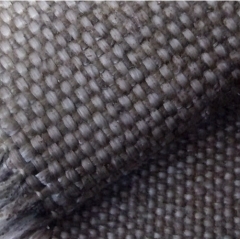
A specially formulated, fine vermiculite dispersion that encapsulate the glass fibers and greatly increases resistance to abrasion and temperature. In tests, glass fabric coated with vermiculite has retained its integrity after exposure to a propane blowtorch for short period at temperatures of 2000degree F/ 1093degree C. However the fabric does become brittle locally after exposure to these extreme temperatures and are not recommended for applications where flexibility is important at high temperatures.
Properties:
Vermiculite improve the abrasion resistance and higher temperature performance.
It's tough, durable and resist metal splash and welding spatter
Used at 1500degree F/ 815degree C continuous
Capable of withstanding temperatures of 2000degree F/ 1093degree C for short periods
Applications:
Welding spark protection blankets/ curtains, plumbers pads
Insulation mattress/jacket cover material
High temperature fabric seals
Fire protection
Exceptional Heat Resistance for Industrial SafetyDesigned to withstand continuous exposure to temperatures up to 1500F (815C), this fabric is a superior choice for industrial applications requiring fire and high-temperature protection. Its vermiculite coating adds a protective layer, ensuring performance even during brief exposures to extreme heat.
Versatile Applications Across IndustriesFrom welding spark protection blankets and curtains to plumbers pads, insulation mattress covers, and high-temperature fabric seals, this material adapts to diverse safety and insulation requirements. Its flexibility and strength make it a go-to solution in environments with frequent heat and fire risks.
Durable Construction for LongevityWith both sides coated in vermiculite, the glass fabric's lifespan is extended and its integrity preserved. The fine dispersion encases and protects each fiber, resulting in a resilient fabric capable of repeated usage and minimal maintenance, ensuring reliability for critical safety operations.
FAQ's of 3.0 Mm Thickness Vermiculite Coated Fiberglass Fabric:
Q: How is the vermiculite coated fiberglass fabric manufactured?
A: A specially formulated, fine vermiculite dispersion is applied to both sides of the glass fabric, effectively encapsulating each glass fiber. This process enhances the inherent heat resistance, durability, and insulating properties of the base fiberglass material.
Q: What are the primary applications for this fabric?
A: The 3.0 mm thickness vermiculite coated fiberglass fabric is primarily used for welding spark protection blankets or curtains, plumbers pads, insulation mattress covers, high-temperature fabric seals, and fire protection barriers in industrial environments.
Q: When should this fabric be used instead of regular fiberglass fabric?
A: This vermiculite coated fabric should be chosen when continuous temperatures reach up to 1500F (815C) or when short-term exposure may exceed 2000F (1093C). Its enhanced heat resistance and double-sided coating make it ideal for harsher, high-risk environments.
Q: Where can this product be sourced?
A: This product is manufactured, exported, and distributed globally, including from suppliers and distributors in China. It can be obtained in rolls of 50 meters and in widths of 1 or 1.5 meters.
Q: What benefits does the vermiculite coating provide?
A: The vermiculite coating protects the underlying glass fibers from abrasion, increases the fabric's heat resistance, and prevents fraying or degradation under extreme temperatures, leading to longer service life and enhanced safety.
Q: How should this fabric be installed or cut for custom applications?
A: The material can be cut to size using industrial shears or other suitable cutting tools. For tailored insulation coverings or fire curtains, standard handling precautions for fiberglass should be followed, including the use of gloves and eye protection.
Q: What is the process for maintaining or cleaning this material?
A: Routine checks for wear and contamination will prolong its performance. Light cleaning can be performed with a soft brush; harsh chemicals or abrasive scrubbing should be avoided to preserve the vermiculite coating.

 English
 Spanish
 French
 German
 Italian
 Chinese (Simplified)
 Japanese
 Korean
 Arabic
 Portuguese
 +8613524603686


 Send Inquiry




 Send Inquiry


 Send Inquiry


