About Glass Tempering Furnace Roller Converyor
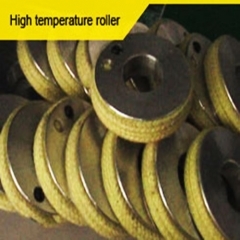
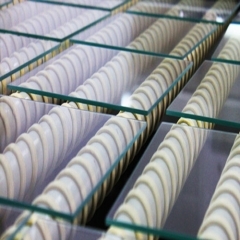
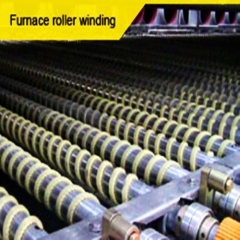
Spiral wound tempering furnace for quickly delivery of high temperature glass. The glass after heating in the high temperature tempering furnace, then rapid cooling and output from the wind gate. Roller tape plays a important role in protect high temperature glass when it exposed to low temperature metal roller without cold explosion and no scratches.
High temperature resistant, flame retardant, high voltage resistant, abrasion resistant, heat resistant, chemical resistant, good mechanical property.
Specification
Size
(mm) | Weight
(g/m) | Packing
(m/roll) |
| 8 * 2 | 16 | 500 |
| 8 * 3 | 25 | 350 |
| 8 * 4 | 30.5 | 300 |
| 9 * 3 | 36 | 250 |
| 9 * 4 | 108 | 100 |
| 10 * 3 | 108 | 100 |
| 10 * 4 | 108 | 100 |
| 12 * 3 | 108 | 100 |
| 12 * 4 | 108 | 100 |
| 12 * 5.5 | 108 | 100 |
| 13 * 3 | 108 | 100 |
| 13 * 4 | 108 | 100 |
| 14 * 3 | 108 | 100 |
| 14 * 4 | 108 | 100 |
Application
Glass tempering furnace roller converyor are mainly suitable for glass tempering furnace roller transmission, tempering furnace roller winding, industrial furnace insulation, etc.
Precision and Durability for Industrial Glass TemperingOur roller conveyors are crafted from high-grade alloy steel, featuring ceramic or polished surfaces which reduce glass marking and optimize product quality. Their modular design simplifies installation and maintenance, minimizing downtime during roller replacement. Configurable roller spacing and dimensions allow seamless adaptation to different glass types and furnace models.
Reliable Operation in Demanding ConditionsEngineered for continuous operation in harsh environments, these conveyors are highly heat and flame resistant. With mechanical drive (chain/sprocket or belt) and automatic/manual greasing, maintenance is straightforward. High hardness and optimized thermal conductivity ensure longevity and precise glass handling even at rigorous operational speeds.
FAQ's of Glass Tempering Furnace Roller Converyor:
Q: How does the roller surface type impact the glass quality during tempering?
A: Polished and ceramic-coated roller surfaces are designed to minimize glass markings and scratches by offering a smooth, heat-resistant transport path. This ensures high-quality glass output by maintaining surface integrity throughout the tempering process.
Q: What customization options are available for the roller conveyor?
A: Roller conveyors are available in both standard and custom sizes, with widths ranging from 800-2400 mm and roller diameters between 40-150 mm. Roller length, spacing, and surface type can also be tailored to meet specific furnace designs and production requirements.
Q: Where is this roller conveyor typically used?
A: This conveyor is commonly used in glass tempering furnaces for the uniform heating and transport of flat glass sheets ranging from 3 mm to 19 mm in thickness, particularly in industrial and commercial glass processing plants.
Q: What are the operational benefits of adjustable speed and modular installation?
A: Adjustable speed (0.5 to 6 m/min) allows the conveyor to match different glass types and production rates, while the modular, bolt-on segment design makes maintenance and roller replacement fast and efficient, reducing production downtime.
Q: How is maintenance performed on the conveyor rollers?
A: Maintenance involves either automatic or manual greasing of the bearings, ensuring continuous smooth operation. With proper maintenance, the rollers can last up to 80,000 furnace hours, although actual lifespan depends on operational and care conditions.
Q: What materials and coatings are used to withstand high temperatures?
A: Rollers are made from high-tensile alloy steel or seamless steel tubes, often with optional ceramic coatings or high-temperature synthetic/natural rubber. These materials provide excellent heat resistance (up to 750C) and durability, crucial for harsh furnace environments.

 English
 Spanish
 French
 German
 Italian
 Chinese (Simplified)
 Japanese
 Korean
 Arabic
 Portuguese
 +8613524603686


 Send Inquiry


 Send Inquiry


 Send Inquiry