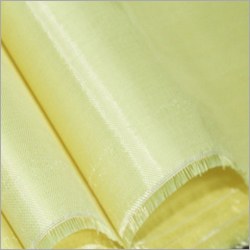
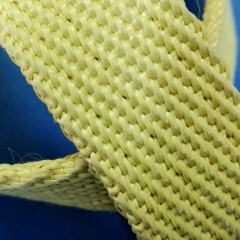
About Aramid Fiber Fabric
Para aramid filament fabric has excellent characteristic of temperature resistance. Not only can at -196 degrees to 304 degrees temperature range used continuously without obvious change but also not dissolved and combustion. However, even at low temperature of -196 degrees, there is no phenomenon of brittle and loss of performance, also can tolerate temperatures up to 560 degrees for a short time contact.Feature
1.High tensile strength;
2.Low elongation, high modulus, high fracture strength;
3.High temperature resistant and flame retardant;
4.High chemical resistance, high stability and resistance to change;
5.Low coefficient of thermal expansion;
6.Low specific gravity;
7.Electrical insulator.
Specification
| Width | 10mm-1500mm |
| Thickness | 0.8, 0.10, 0.11, 0.13, 0.22, 0.24, 0.25, 0.28, 0.30mm |
| Weight Color | 155g/m2, 170g/m2, 180g/m2, 185g/m2, 200g/m2, 205g/m2, 220g/m2 Yellow / Black / Red / Blue/Orange/Mixture |
| Material | Paramtex Aramid filament |
| Packing | 100 meters per roll, accept custom |
ApplicationBecause of the para aramid cloth unique high tensile strength and low density characteristics, it's used for reinforced products mainly to increase the strength in various industries.
Unmatched Thermal and Chemical ResistanceOur aramid fiber fabric boasts remarkable resistance to heat and chemicals, making it dependable for critical safety and industrial environments. It remains stable up to 500C-far beyond the limits of conventional synthetic fabrics. This durability ensures superior performance in fire fighting gear, military equipment, and protective apparel, where the risks of heat exposure and chemical spills are ever-present.
Versatile Applications Across IndustriesWith high tensile strength and excellent electrical insulation, this fabric serves a wide range of industries. Whether reinforcing composites in aerospace, offering thermal shielding in automotive, or ensuring cut- and flame-resistance in protective clothing and gloves, its versatility makes it a top choice for manufacturers, suppliers, and distributors worldwide.
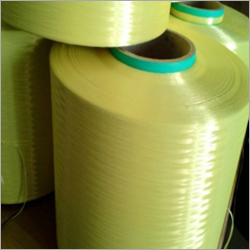
Tailored Specifications for Specialized NeedsAvailable in customizable widths, thicknesses, and weave types, our aramid fiber fabric adapts seamlessly to project-specific requirements. Filament counts of 1500D, 3000D, and 6000D ensure strength options, while rolls are provided in 50-100 meter lengths. Consistency in density and smoothness guarantees reliable integration and performance in various end products.
FAQ's of Aramid Fiber Fabric:
Q: How do I correctly store aramid fiber fabric to maximize its shelf life?
A: Store the fabric in a cool, dry area away from direct sunlight and chemicals. Keep rolls covered with the provided protective material to prevent contamination and UV exposure. Under these conditions, the fabric maintains optimal performance for up to five years.
Q: What are the main advantages of using aramid fiber fabric over conventional materials?
A: Aramid fiber fabric provides superior heat resistance, excellent flame retardancy, high tensile strength, and exceptional abrasion and chemical resistance. Unlike many synthetic materials, it does not melt but only decomposes above 500C, making it particularly safe and durable in extreme environments.
Q: Where can aramid fiber fabric be effectively applied?
A: This fabric is ideal for protective clothing, industrial gloves, aerospace components, automotive parts, fire fighting suits, military gear, electronic insulation, and as a reinforcement for high-strength composites. Its unique properties cater to industries requiring robust and reliable material performance.
Q: What is the process for ordering and customization of aramid fiber fabric?
A: Contact us with your required specifications such as width, thickness, weave type, and filament count. Minimum order is 10 meters. Orders are processed with quality and protective packaging, and sizes can be tailored to fit your project needs.
Q: What benefits does the high electrical insulation offer?
A: The excellent electrical insulation makes this fabric an ideal choice for electronic insulation applications and environments where electrical hazards may be present. It helps protect workers and sensitive equipment by safely resisting electrical current passage.
Q: When should I select a plain versus twill weave for my application?
A: Select a plain weave for a tighter, more stable structure suitable for smooth surfaces and lighter wear. Twill weave offers increased flexibility and drape with enhanced abrasion resistance, making it suitable for dynamic applications or where more movement is encountered.

 English
 Spanish
 French
 German
 Italian
 Chinese (Simplified)
 Japanese
 Korean
 Arabic
 Portuguese
 +8613524603686

 Send Inquiry





 Send Inquiry


 Send Inquiry