About Fiberglass Lagging Rope
Fiberglass Lagging Rope
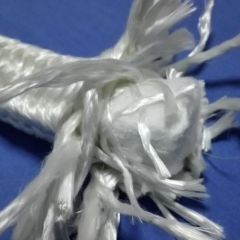
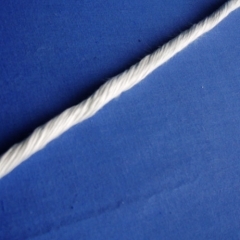
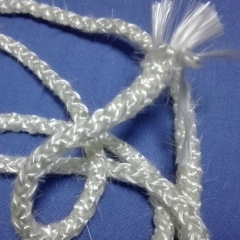
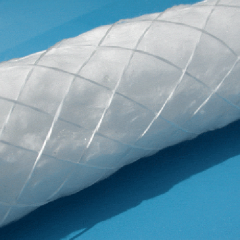
Produced of bulk texturized fiberglass yarns, with fiberglass bulk core or ceramic bulk core, traps greater amounts of air and demonstrates better insulation properties and greater fullness.
Property:
An alternative to asbestos based textiles
It will not burn, rot, mildew or deteriorate and resist most acids.
It has low coefficient of thermal expansion
Used at 1000 degree F / 537 degree C continuous, melts above 1500 degree F / 815 degree C
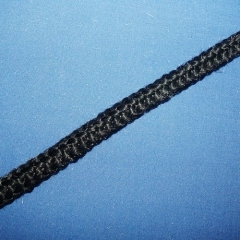
Available with specialty coatings, such as Dyeing, Graphite, Silicone rubber, Vermiculite, etc.
Common applications including
Used as a gasket or seal on boiler, coke oven, industrial oven and wood stove/pellet stove doors. It is also used for crucible packing and pollution control equipment, pump shaft packing
Exceptional Heat ResistanceOur Fiberglass Lagging Rope withstands continuous temperatures up to 1000F (537C), making it ideal for high-temperature sealing and insulation tasks. The ceramic fiber core, combined with robust fiberglass overbraiding, ensures resilience even in demanding industrial environments, preventing heat loss and maintaining integrity during prolonged exposure.
Versatile Industrial ApplicationsThis rope is widely implemented as gaskets and seals on boilers, coke ovens, pellet stove doors, and industrial ovens. Its strong construction and specialty coatings make it suitable for crucible and pump shaft packing, as well as for equipment used in pollution control, guaranteeing safe and reliable operation across multiple sectors.
Customizable Coatings for Enhanced FunctionalityFiberglass Lagging Rope can be tailored with specialty surface treatments such as dyeing, silicone rubber, graphite, and vermiculite. These coatings not only improve resistance to chemicals, abrasion, and environmental factors but also enable the rope to adapt to unique operational requirements, extending its service life.
FAQ's of Fiberglass Lagging Rope:
Q: How is Fiberglass Lagging Rope manufactured?
A: Fiberglass Lagging Rope is produced by overbraiding texturized fiberglass yarns around a ceramic fiber core. This technique results in a dense, durable construction, allowing the rope to withstand high temperatures and mechanical stress.
Q: What applications is this rope suitable for?
A: It is primarily used as a gasket or seal for doors of boilers, coke ovens, industrial ovens, and wood or pellet stoves. Additionally, it's effective for crucible packing, pump shaft packing, and in pollution control systems.
Q: When should specialty coatings be used on the rope?
A: Specialty coatings such as graphite, silicone rubber, or vermiculite should be chosen based on exposure to harsh chemicals, abrasion, or extreme temperatures. These treatments offer added protection and prolong the rope's lifespan in demanding settings.
Q: Where can the Fiberglass Lagging Rope be installed?
A: It can be installed wherever high-temperature insulation or sealing is necessary, such as doors of industrial furnaces, ovens, or stoves, and in industrial equipment requiring durable thermal barriers or packing solutions.
Q: What are the benefits of using a ceramic fiber core in the rope?
A: The ceramic fiber core significantly enhances thermal resistance, ensuring excellent performance in continuous use up to 1000F (537C), with a melting point above 1500F (815C), making the rope suitable for extreme conditions.
Q: How does the rope contribute to equipment safety and efficiency?
A: By providing reliable insulation and sealing, the rope helps prevent heat loss, reduce risk of fire or burns, and maintain optimal operating conditions, thus contributing to both the safety and efficiency of industrial equipment.