About Ceramic Fiber Fabric Fiberglass Reinforced
Ceramic Fiber Fabric, Fiberglass Reinforced
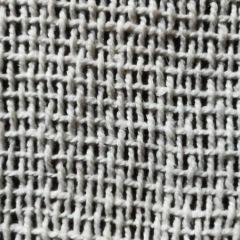
Produced from an extremely pure alumina-silicate ceramic fiber. Available with fiberglass yarn reinforcement or Steel wire reinforcement
An alternative to asbestos based textiles. Provides low thermal conductivity and good dielectric strength and features excellent corrosion resistance
Used at 2300 degree F/ 1260 degree C continuously, molts above 3000 degree F/1650 degree C
It will not burn, rot, mildew or deteriorate and resist most acids. It has low coefficient of thermal expansion, used in applications including welding blankets, stress relieving, removable insulation covers, fire blankets, fire curtains, expansion joints and flue ducts.
| 2300 degree F / 1260 degree C: Ceramic Fiber Fabric |
| Part number | Roll size | Weight (kg/roll) | Reinforcement |
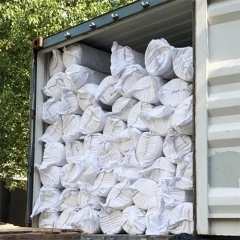
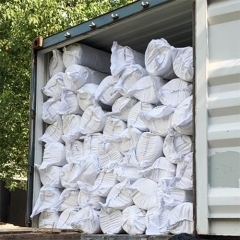
| WCF115 | 1.5mmX1mX30m | 24kg | Glass |
| WCF215 | 1.5mmX1mX30m | 26kg | Stainless steel wire |
| WCF120 | 2.0mmX1mX30m | 30kg | Glass |
| WCF220 | 2.0mmX1mX30m | 33kg | Stainless steel wire |
| WCF130 | 3.0mmX1mX30m | 42kg | Glass |
| WCF230 | 3.0mmX1mX30m | 45kg | Stainless steel wire |
High-Temperature PerformanceCeramic fiber fabric reinforced with fiberglass excels under extreme heat, maintaining structural integrity at continuous temperatures up to 2300F (1260C) and withstanding molten splashes well beyond. This makes it a reliable choice for furnace linings, welding blankets, and fire protection barriers in industrial settings.
Versatile Industrial ApplicationsThis fabric is used across a range of industries, including metalworking, power generation, and manufacturing. Its roles include serving as fire curtains, insulation pads, expansion joints, and stress-relief covers, owing to its impressive heat resistance, flexibility, and adaptability to various protective applications.
Flexible Sizing and Reinforcement OptionsAvailable in multiple thicknesses (1.5mm to 5mm), weights (800gsm to 2300gsm), and widths (1m, 1.2m, 1.5m), the ceramic fiber fabric can be customized to suit specific requirements. Optional reinforcements-either fiberglass yarn or steel wire-offer enhanced mechanical strength and durability, making the material suitable for rigorous industrial demands.
FAQ's of Ceramic Fiber Fabric Fiberglass Reinforced:
Q: How is ceramic fiber fabric reinforced with fiberglass used in high-temperature applications?
A: Ceramic fiber fabric reinforced with fiberglass is commonly utilized for thermal insulation, fireproofing, and heat shielding in applications such as welding blankets, fire curtains, removable insulation covers, and expansion joints, due to its ability to withstand continuous exposure to extreme temperatures.
Q: What are the benefits of choosing ceramic fiber fabric over traditional asbestos-based textiles?
A: Ceramic fiber fabric is a safer and more environmentally friendly alternative to asbestos-based products. It offers exceptional thermal stability, low thermal conductivity, and does not pose the health risks associated with asbestos, making it ideal for modern industrial insulation and protection needs.
Q: Where can this ceramic fiber fabric be applied most effectively?
A: This fabric is highly effective wherever thermal isolation and fire resistance are required, such as welding shops, foundries, power plants, and factories. It is commonly used for making fire blankets, pipe insulation, stress-relieving wraps, and protective curtains.
Q: When should I select fiberglass yarn reinforcement versus steel wire reinforcement?
A: Choose fiberglass yarn reinforcement when flexibility and some mechanical strength are required for typical insulation or fireproofing tasks. Opt for steel wire reinforcement when enhanced mechanical durability and resistance to wear or vibration are critical, especially in harsher industrial environments.
Q: How does the surface treatment enhance the fabric's durability?
A: Surface treatments using fiberglass yarn or steel wire reinforcement provide added structural strength, abrasion resistance, and longevity. This ensures that the fabric performs reliably over prolonged use, even in challenging high-temperature applications.
Q: What is the process for installing this ceramic fiber fabric in industrial systems?
A: Installation typically involves cutting the fabric to size using special shears and securing it in place with metal clips, fasteners, or stitching. Proper fitting ensures full coverage and optimal insulation or fire protection within the intended system or equipment.

 English
 Spanish
 French
 German
 Italian
 Chinese (Simplified)
 Japanese
 Korean
 Arabic
 Portuguese
 +8613524603686





 Send Inquiry




 Send Inquiry


 Send Inquiry