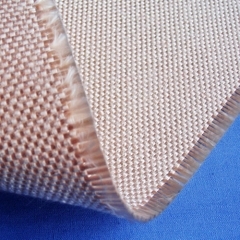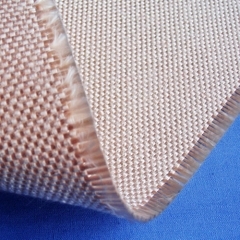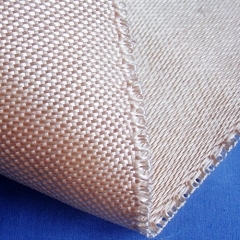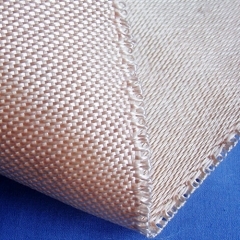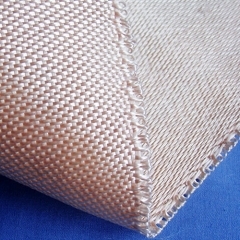
About 3mm Thickness Heat Treated Caramelized Fiberglass Fabric
3mm Thickness Heat Treated Caramelized Fiberglass Fabric
Organics burn out during the heat treatment process, it is highly flexible and minimal shrinkage, used in surroundings where no smokes allowed, applications including welding blankets, stress relieving, removable insulation covers, fire blankets, fire curtains, expansion joints and flue ducts.
Properties:
- Used at 1000 degree F/ 537 degree C continuous
- Heat treatment to burn out organic i.e. starch or silane on fabrics
- Used in places where no smokes allowed
- Available both filament and textured fabrics
- A high-performance very high temperature fabric, used in almost all industries for heat protection.
Applications:
- Welding spark protection blankets/curtains, plumbers pads,
- Insulation mattress/jacket cover material
- High temperature fabric seals
- Fire protection
High Temperature DurabilityEngineered from premium fiberglass with a 3mm thickness and caramelized surface, this fabric withstands extreme temperatures, ensuring long-term reliability. Its 1800 GSM density enhances its ability to shield against welding sparks, flames, and radiant heat, making it a choice material for demanding industrial environments.
Safe and Smoke-Free OperationThe proprietary heat treatment eliminates organic binders like starch or silane, resulting in a product that produces virtually no smoke under heat exposure. This feature is particularly valuable in smoke-sensitive settings such as welding shops, power plants, or chemical facilities, providing both performance and safety exceeding standard requirements.
Versatile Industrial ApplicationsWith a tan color and substantial width options, this heat treated fiberglass fabric is suitable for multiple high-risk industry uses. Common applications include welding curtains, spark protection blankets, plumbers' pads, insulation jackets, and high-temperature fabric seals, offering broad utility and trusted protection wherever fire resistance is essential.
FAQ's of 3mm Thickness Heat Treated Caramelized Fiberglass Fabric:
Q: How is the caramelized fiberglass fabric processed to achieve a smoke-free finish?
A: The fabric undergoes a specialized heat treatment process, which burns off organic substances such as starch or silane binders. This caramelization not only enhances fire resistance but also ensures the fabric does not emit smoke when exposed to high temperatures, making it safe for strict regulatory environments.
Q: What are the primary uses for the 3mm heat treated fiberglass fabric?
A: This fabric is widely used as welding spark protection blankets and curtains, insulation mattress covers, plumbers' pads, high-temperature fabric seals, and fire protection barriers. Its robust construction makes it suitable for nearly any industry requiring advanced heat and flame defense.
Q: When should this fabric be selected over standard fiberglass textiles?
A: Choose this heat treated caramelized variant when applications demand both high-temperature resistance and smoke-free performance, such as in welding environments, chemical plants, or locations with air quality requirements. Its enhanced durability and safety make it ideal for critical industrial operations.
Q: Where can the caramelized fiberglass fabric be applied effectively?
A: It can be installed in welding bays, manufacturing plants, shipyards, power stations, and virtually any setting confronting frequent exposure to sparks, high heat, or fire. Its flexibility and broad width allow effective coverage for large or uniquely shaped equipment.
Q: What benefits does the 3mm thickness provide compared to thinner alternatives?
A: The 3mm thickness delivers superior insulation and physical protection from direct flames, sparks, and heat. This increased density fortifies the fabric's structural integrity, reducing the risk of tearing or burning through during intense industrial processes.
Q: How can users ensure proper installation and maintenance of this fabric?
A: To maintain optimal performance, cut the fabric with sharp tools to avoid fraying, secure it firmly in place (for curtains or blankets), and inspect regularly for any signs of wear or degradation. Cleaning can be performed using non-abrasive methods to preserve the integrity of the caramelized surface.