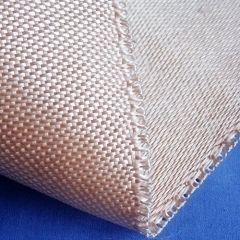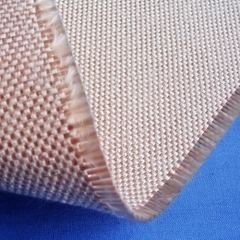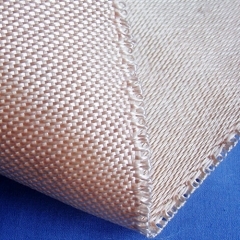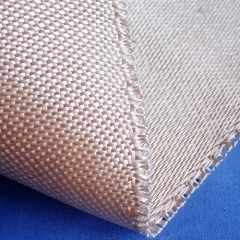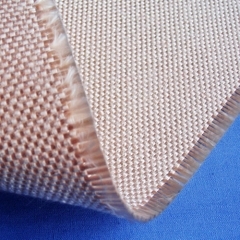
About 1.3mm thickness HT3786 Heat treated (Caramelized) fiberglass fabric
Organics burn out during the heat treatment process, it is highly flexible and minimal shrinkage , used in surroundings where no smokes allowed, applications including welding blankets, stress relieving, removable insulation covers, fire blankets, fire curtains, expansion joints and flue ducts.Properties:Used at 1000degree F
/ 537degree C continuous Heat treatment to burn out organic i.e. starch or silane on fabricsUsed in places where no smokes allowedAvailable both filament and texturized fabricsA high-performance very high temperature fabric, used in almost all industries for heat protection.Applications:Welding spark protection blankets/curtains, plumbers pads,Insulation mattress/jacket cover materialHigh temperature fabric sealsFire protectionPrecision Heat Treatment for Enhanced SafetyThe HT3786 fiberglass fabric undergoes a specialized caramelized heat treatment process to eliminate organic substances such as starch or silane. This procedure minimizes smoke emissions during high-temperature exposure and significantly elevates the fabric's resistance to fire and heat. The result is a safer, low-emission material ideal for critical industrial operations demanding clean air and reliable heat protection.
Versatile Applications Across Multiple IndustriesThanks to its durability and robust insulation properties, this fabric finds usage as welding spark blankets, curtains, insulation mattress covers, plumber's pads, and high-temperature seals. Its adaptability enables it to meet safety standards in almost every industry where heat and fire hazards are present, from heavy manufacturing to construction and energy sectors.
FAQ's of 1.3mm thickness HT3786 Heat treated (Caramelized) fiberglass fabric:
Q: How is the 1.3mm HT3786 fiberglass fabric processed for use in high-temperature applications?
A: The fabric undergoes a specialized heat treatment (caramelization) that effectively burns out organic residues such as starch or silane. This ensures a clean, high-temperature resistant surface, free of substances that might emit smoke or odors during use.
Q: What are the primary benefits of using this heat-treated fiberglass fabric?
A: The main benefits include exceptional thermal resistance, minimized smoke generation, improved fire protection, and durability even in demanding industrial environments. Its robust composition makes it suitable for protecting personnel and equipment from high-temperature hazards.
Q: When should this fiberglass fabric be selected over untreated alternatives?
A: It should be chosen when applications require low-smoke emissions, superior fire safety, and compliance with strict health and safety codes-such as in places where smoke cannot be tolerated or in environments with sensitive equipment.
Q: Where can this heat-treated fiberglass fabric be typically used?
A: This fabric is widely used in welding areas, insulation mattress covers, plumber's pads, high-temperature gaskets or seals, fire protection zones, and virtually any industrial site requiring reliable heat shielding.
Q: What is the process behind the caramelized or heat-treated finish?
A: Heat treatment involves subjecting the fiberglass to controlled high temperatures, which burns away organics like starch and silane. This purification process enhances the fabric's performance by reducing its combustibility and smoke output.
Q: How does the fabric's thickness and weight contribute to its performance?
A: With a thickness of 1.3mm and a weight of 1300 GSM, the fabric achieves excellent durability and insulation, enabling it to resist high temperatures, abrasive conditions, and provide effective barriers against sparks and flames.
Q: What options are available for sizing and roll length?
A: The fabric is offered in widths of 1 or 1.5 meters and comes in rolls of 50 meters, providing flexibility for different installation requirements and ease of handling during manufacturing or onsite applications.