About 0.8mm Thickness Weave Lock Fiberglass Fabric
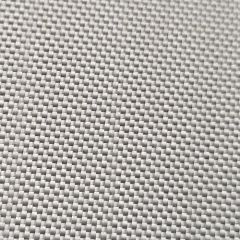
0.8mm Thickness Weave Lock Fiberglass Fabric
Weave lock treatment is impregnating the fiberglass fabric with inorganic (acrylic) or organic(starch) resin together with certain pigment by requirement, which increase the abrasion resistance and vary the stiffness of fiberglass fabric, it improves the anti-fray property of fabric and eliminate irritation to the skin while cutting, sewing and handling the fiberglass fabric.
Properties:
Service temperature 550degree C
increase the abrasion resistance
anti-fray property
Applications:
Covering materials on rockwool board as decoration
Welding blanket
Insulation layers in non metallic expansion joint
Insulation mattress/jacket cover materials
Superior Surface ProtectionOur weave lock treatment significantly improves the fabric's resistance to abrasion and fraying. This innovation safeguards the underlying materials and maintains fabric integrity even in intense industrial environments. The colored pigments, carefully chosen according to requirements, also enable quick identification and aesthetic finishing for various insulation and covering projects.
Versatile Applications in InsulationEngineered for a range of uses, this fiberglass fabric excels as a protective layer on rockwool boards, welding blankets, and other insulation systems. Its unique surface treatment and material properties ensure compatibility with non-metallic expansion joints and insulation jackets, enhancing both functionality and longevity in thermal and fire-resistant solutions.
User-Friendly Handling & Enhanced DurabilityThanks to its special impregnation process, the fabric is designed to minimize irritation to the skin during cutting, sewing, or handling. This not only speeds up manufacturing or installation workflows but also improves worker comfort and safety, making it easier and more cost-effective for professionals to complete large-scale projects.
FAQ's of 0.8mm Thickness Weave Lock Fiberglass Fabric:
Q: What is the primary benefit of the weave lock treatment on this fiberglass fabric?
A: The weave lock treatment reinforces the fabric, increasing its abrasion resistance and significantly reducing fraying. It also helps eliminate skin irritation during handling, making the fabric more user-friendly for cutting, sewing, and installation.
Q: How is the color applied to the fiberglass fabric?
A: Color is integrated during the impregnation process, using inorganic (acrylic) or organic (starch) resin combined with pigments as per requirements. This ensures strong, lasting coloration and helps in identifying or differentiating insulation layers.
Q: Where can this weave lock fiberglass fabric be used?
A: This fabric is widely used as a covering material for rockwool boards, welding blankets, insulation layers in non-metallic expansion joints, and as protective covers for insulation mattresses or jackets.
Q: What is the typical process for installing or handling this fiberglass fabric?
A: The fabric can be easily cut, sewn, or handled without causing irritation to the skin, thanks to the weave lock treatment. It integrates smoothly into insulation systems or protective covers, and is well-suited for both manual and machine processing.
Q: What are the available sizes and colors for this fabric?
A: It is available in thicknesses of 0.8mm, widths of 1 or 1.5 meters, and lengths of 50 meters. The standard colors offered are blue and green, though custom pigmentation may be possible as per order requirements.
Q: When should I consider using this fabric over standard fiberglass fabrics?
A: Choose this weave lock fiberglass fabric when you need enhanced abrasion resistance, reduced fraying, improved handling comfort, and reliable performance in insulation or protective applications, particularly in demanding industrial or thermal settings.
Q: How does this product benefit manufacturers, distributors, and installers?
A: Manufacturers and suppliers benefit from the fabric's consistent quality, ease of processing, and reduced waste due to its anti-fray and skin-friendly properties. Installers enjoy faster handling and less discomfort, which improves efficiency and reduces installation time.

 English
 Spanish
 French
 German
 Italian
 Chinese (Simplified)
 Japanese
 Korean
 Arabic
 Portuguese
 +8613524603686


 Send Inquiry




 Send Inquiry


 Send Inquiry


