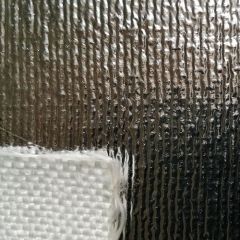
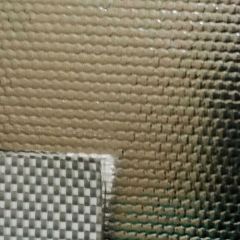
About 0.8mm Aluminium foil laminated texturized fiberglass fabric
Aluminium foil laminated fiberglass fabric is constructed from a high temperature base filament/texturized fiberglass fabric which is then coated with highly reflective polished aluminum foil. The aluminum foil coating melts at 1220degree F/ 660degree C, however it does take some time for the aluminum foil to absorb enough heat to melt,thereby it can withstand short exposure to the higher temperatures. The basic fiberglass fabric is 1000degree F/537degree C, while adhesive will burn-off or vaporize at temperatures above 300degree F/148degree C.
Properties:
One side coated with Aluminum foil. Protection from intense radiant heat
Reflects more than 95% of the radiant heat that contacts its surface
Excellent radiant heat protection from sources such as super-hot metal slabs, proximity to liquid metal, infrared heaters, open flame / plasma or engine exhaust manifolds is a concern
Applications:
Serve as a welding defender, heat protection quilt, foundry splash protection
Conveyor belt and expansion joint
Chemical corrosion resistance, packing material
Used for aerospace, marine, chemical industrial, power plant, automotive, construction, pipling flexibility and sealing industry.
PSA(pressure sensitive adhesive) Available
This fabric is also available with a self-adhesive backing. The adhesive is water adhesive based, and will burn-off or vaporize at temperatures above 300degree F/148degree C.If prolonged use of the self-adhesive fabric above 300degree F/148degree C is desired, then alternate securing methods such as fasteners, wire or clamps should be used.Personnel should avoid inhaling fumes from the PSA.
We have a SuperTemp adhesive can work at temperature 280degree C continuously.
Exceptional Heat and Flame ResistanceConstructed from texturized fiberglass fabric and coated with reflective aluminum foil, this fabric withstands high temperatures, effectively shielding equipment and personnel from radiant heat or molten metal splashes. Its reliable performance makes it indispensable in welding, foundry, and power plant environments.
Versatile Industrial ApplicationsSuitable for a wide range of industries, this material serves as an effective layer in heat-protective quilts, expansion joints, sealing solutions, and conveyor belts. Its corrosion resistance and mechanical strength ensure durability and reliability across harsh operating conditions.
FAQ's of 0.8mm Aluminium foil laminated texturized fiberglass fabric:
Q: How is the aluminium foil laminated texturized fiberglass fabric manufactured?
A: The fabric is produced by weaving high-temperature-resistant texturized fiberglass, which is then coated on one side with polished aluminum foil (in 7, 18, or 25 micron thickness) using an industrial lamination process. This fusion enhances thermal reflectivity and protects against chemical and environmental damage.
Q: What are the main uses for this 0.8mm aluminium foil fiberglass fabric?
A: Primary applications include serving as welding defenders, heat protection quilts, foundry splash guards, expansion joints, conveyor belt covers, and packing materials. It is commonly used in industries such as aerospace, marine, chemical processing, automotive, and construction.
Q: When should I choose a foil-laminated fiberglass fabric over a standard fiberglass fabric?
A: Select a laminated version when you need extra thermal reflectivity, superior chemical corrosion resistance, or additional protection from radiant heat, chemical exposure, or molten metal splashes, as required in harsh or high-temperature environments.
Q: Where can this product be installed or applied?
A: This fabric is used in locations demanding thermal insulation or heat reflection, such as welding enclosures, power plant piping, foundry workshops, construction expansion joints, conveyors, and marine vessels. Its flexibility and durability make it suitable for both temporary and permanent installations.
Q: What are the benefits of the aluminum foil surface treatment?
A: The aluminum foil coating significantly boosts heat reflectivity, shields against chemical corrosion, and improves the material's resistance to moisture, ensuring longer lifespan and enhanced safety in operations requiring heat or fire protection.
Q: How does the material contribute to occupational safety?
A: By serving as a defender against sparks, molten metal splashes, and intense radiant heat, this laminated fabric helps protect workers and sensitive equipment, reducing the risk of burns, equipment damage, or hazardous exposure in industrial settings.

 English
 Spanish
 French
 German
 Italian
 Chinese (Simplified)
 Japanese
 Korean
 Arabic
 Portuguese
 +8613524603686


 Send Inquiry




 Send Inquiry


 Send Inquiry