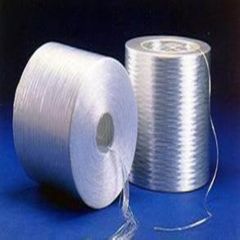
About Texturized fiberglass yarn - C glass
Texturized C glass yarn is made of fiberglass roving yarns which are bulged and blown through texturized machine with high pressure air.
Property:It has high strength as continuous fiber and fluffiness as staple fiber.low thermal conductivity, corrosion resistance, high temperature resistance, high air holding capacity, high filtration efficiency, high dust-accommodation and filterabilityAn alternative to asbestos based yarnsSpecifications:C glass
Diameter: 11micron, 13micron
Tex: 400/600/800/1000/1200/2400/5000tex
Package: 5kg/roll or 10kg/roll, 20kg/box
Spiral texturizing type: braiding, weaving, twisting
Plain texturizing type: core of rope, twisting, knitting
Moisture content <5%
Applications:
This texturized fiberglass yarn is used to weave cloth, tape, braid rope, packing, sleeve, twist rope.Superior Texturization for Versatile UseOur C glass fiberglass yarn undergoes a specialist bulged and blown texturization process, resulting in superior bulk and enhanced surface area. This method ensures the yarn is highly effective for weaving a variety of products including industrial cloth, packing, and ropes, making it suitable for both demanding and creative applications.
Applications Across Multiple IndustriesTexturized fiberglass yarn is widely used to manufacture packing materials, heat-insulating tapes, protective sleeves, braided ropes, and twist ropes. Its robust thermal and mechanical properties, coupled with flexibility and durability, offer significant benefits for industries such as insulation, filtration, and sealing.
FAQ's of Texturized fiberglass yarn - C glass:
Q: How is C glass texturized fiberglass yarn manufactured?
A: C glass texturized fiberglass yarn is produced by taking fiberglass roving yarns and processing them through a texturizing machine. In this process, high-pressure air is used to bulge and blow the yarn, creating a textured, voluminous structure.
Q: What are the primary applications of this yarn?
A: This yarn is primarily used for weaving industrial cloth, tapes, braid ropes, packing materials, sleeves, and twist ropes due to its high strength, flexibility, and thermal resistance.
Q: When should I choose 11 micron versus 13 micron diameters?
A: Select the 11 micron diameter for applications requiring finer, more flexible yarns, and the 13 micron diameter for products that demand greater bulk and enhanced durability.
Q: Where is this product commonly used?
A: Texturized fiberglass yarn is commonly found in industrial manufacturing, electrical insulation, sealing, and protective applications due to its durability and resistance to heat and chemicals.
Q: What is the benefit of texturizing fiberglass yarn?
A: Texturizing increases the bulk, softness, and surface area of the yarn, enhancing its insulating properties and making it easier to weave into various forms while maintaining high strength.
Q: How do I use texturized fiberglass yarn effectively?
A: For optimal results, use the yarn in weaving, braiding, or packing equipment designed for glass fibers. Follow safety guidelines to prevent fiber dispersion and ensure stable, consistent product output.
Q: What advantages does sourcing from China offer?
A: China is a leading exporter, manufacturer, and supplier of fiberglass yarns, offering competitive pricing, reliable quality, and global distribution networks for bulk and custom orders.

 English
 Spanish
 French
 German
 Italian
 Chinese (Simplified)
 Japanese
 Korean
 Arabic
 Portuguese
 +8613524603686


 Send Inquiry




 Send Inquiry


 Send Inquiry