About Bio Soluble Ceramic Fiber Fabric
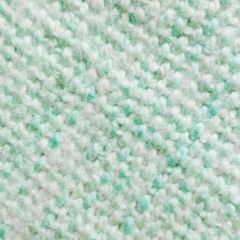
Bio Soluble Ceramic Fiber Fabric
Produced from an extremely pure bio soluble alumina-silicate ceramic fiber
Available with fiberglass yarn reinforcement or Steel wire reinforcement. An alternative to asbestos based textiles
Provides low thermal conductivity and good dielectric strength and features excellent corrosion resistance
Used at 2300 deg F/1260 deg C continuously, molts above 3000 deg F/1650 deg C
It will not burn, rot, mildew or deteriorate and resist most acids. It has low coefficient of thermal expansion, used in applications including welding blankets, stress relieving, removable insulation covers, fire blankets, fire curtains, expansion joints and flue ducts.
Specification
| 2300 deg F/1260 deg C: Bio Soluble Ceramic Fiber Fabric |
| Part number | Roll size | Weight (kg/roll) | Reinforcement |
| WCF115B | 1.5mmX1mX30m | 24kg | Glass |
| WCF215B | 1.5mmX1mX30m | 26kg | Stainless steel wire |
| WCF120B | 2.0mmX1mX30m | 30kg | Glass |
| WCF220B | 2.0mmX1mX30m | 33kg | Stainless steel wire |
| WCF130B | 3.0mmX1mX30m | 42kg | Glass |
| WCF230B | 3.0mmX1mX30m | 45kg | Stainless steel wire |
Exceptional Thermal and Chemical ResistanceEngineered for environments with intense heat exposure, this fabric withstands continuous temperatures up to 1200C without significant deterioration. Its resistance to thermal shock and chemicals makes it suitable for use in furnaces, industrial ovens, and processes requiring reliable protection against extreme conditions.
Superior Safety and Environmental ResponsibilityFormulated as a bio-soluble, asbestos-free product, the ceramic fiber fabric does not carry any hazardous classification and poses minimal risk during handling or disposal. With a pH value between 7 and 9 and an extremely low chloride content, it supports both workplace safety and environmental sustainability.
Versatility in Industrial ApplicationsThe fabric's flexible, woven construction enables easy adaptation to various installation needs, such as thermal insulation, gaskets, welding blankets, expansion joints, and industrial protection coverings. Its customizable widths, thicknesses, and lengths accommodate diverse projects, ensuring efficient and tailored insulation solutions.
FAQ's of Bio Soluble Ceramic Fiber Fabric:
Q: How should Bio Soluble Ceramic Fiber Fabric be stored for optimal performance?
A: It is recommended to store the fabric in a dry and well-ventilated area to preserve its structural integrity and prevent moisture absorption, ensuring reliable insulation properties throughout its service life.
Q: What benefits does the bio-soluble composition offer over traditional ceramic fiber or asbestos-based products?
A: The bio-soluble formulation is eco-friendly and does not pose hazardous risks, making it safer to handle, use, or dispose of than traditional ceramic fiber or asbestos materials while maintaining high thermal and chemical resistance.
Q: When is it appropriate to use this fabric as a thermal insulation solution?
A: This fabric is suitable whenever you require high-temperature insulation up to 1200C, such as in furnace curtains, heat shields, gaskets, expansion joints, or welding blankets, especially where excellent acoustic insulation and flexibility are also important.
Q: Where can this fabric be used most effectively in industrial settings?
A: It is ideal for use in industrial plants, refineries, foundries, and manufacturing facilities where equipment and personnel require protection from extreme heat, chemical exposure, or acoustic hazards.
Q: What is the process for obtaining custom sizes or thicknesses of this fabric?
A: Custom sizes and thicknesses can be ordered directly through the manufacturer, distributor, or supplier. Provide your specific dimensions (width, length, and thickness) for fabrication to match unique application requirements.
Q: How is the fabric designed to handle both thermal shock and chemical exposure?
A: Its woven structure and fiber composition provide resilience against rapid temperature changes and chemical environments, minimizing shrinkage (less than 2% at 1000C) and maintaining stable performance over time.
Q: What are the acoustic and thermal benefits of choosing this ceramic fiber fabric?
A: The fabric delivers excellent sound absorption, making it suitable for applications needing both thermal and acoustic insulation. With a low thermal conductivity of 0.38 W/mK at 800C, it efficiently reduces heat loss and creates quieter, safer workplaces.

 English
 Spanish
 French
 German
 Italian
 Chinese (Simplified)
 Japanese
 Korean
 Arabic
 Portuguese
 +8613524603686

 Send Inquiry


 Send Inquiry


 Send Inquiry